
NVIDIA Corporation shares climbed to new all-time highs in early March 2026, with the stock trading above $195 per share after the company reported fiscal fourth-quarter revenue of $44.1 billion. The results, which exceeded Wall Street expectations by approximately 8%, were driven almost entirely by demand for the company's data centre GPUs used in artificial intelligence training and inference workloads.
Why NVIDIA Dominates the AI Chip Market
NVIDIA controls an estimated 80-85% of the market for AI training accelerators. Its H200 and Blackwell-generation chips are the standard hardware used by companies including Microsoft, Google, Amazon, and Meta to train and deploy large language models. Each chip costs between $25,000 and $40,000, and major cloud providers order them in quantities of tens of thousands.
The company's data centre revenue grew 93% year-on-year in the most recent quarter, reaching $39.3 billion. This single segment now accounts for approximately 89% of NVIDIA's total revenue, up from approximately 56% just two years ago. For current NVIDIA stock data, visit Yahoo Finance.
Competition and Supply Constraints
Advanced Micro Devices (AMD) has been developing competing products. Its MI300X chip has won contracts with several cloud providers, though AMD's data centre GPU revenue remains a fraction of NVIDIA's. Intel's Gaudi 3 accelerator has also entered the market, though adoption has been limited.
Custom chips designed by cloud providers themselves represent a longer-term competitive threat. Google's TPU (Tensor Processing Unit), Amazon's Trainium and Inferentia chips, and Microsoft's Maia 100 are all designed to reduce reliance on NVIDIA hardware. However, analysts at Bernstein estimate that these custom chips currently handle less than 15% of cloud AI workloads.
Data Centre Energy Consumption
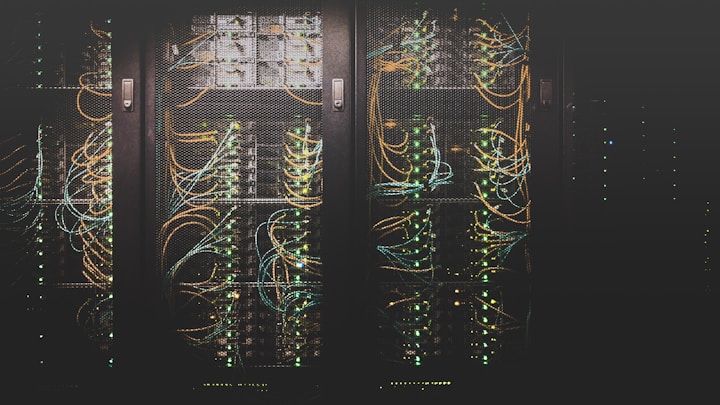
The rapid expansion of AI data centres has raised questions about energy consumption. A single large AI training cluster can consume as much electricity as a small town. The International Energy Agency estimated in its 2025 report that global data centre electricity consumption would reach approximately 1,000 terawatt-hours by 2026, roughly equivalent to Japan's total electricity consumption.
This has created an unexpected intersection with the cryptocurrency mining industry. Both activities require large amounts of electricity and cooling infrastructure. In some regions, particularly in Texas and parts of Scandinavia, former crypto mining facilities have been converted to AI computing centres, as the economics of AI inference have become more attractive than Bitcoin mining at current difficulty levels.
What the Stock Price Reflects
At $195 per share, NVIDIA's market capitalisation exceeds $4.7 trillion, making it one of the three most valuable companies in the world alongside Apple and Microsoft. The stock trades at approximately 38 times forward earnings, which is above the S&P 500 average of roughly 21 times but below the 50-60 times multiples seen during the peak of the 2024 rally.
Analysts at Morgan Stanley have a price target of $220, while Goldman Sachs targets $210. Both cite continued demand growth for AI computing as the primary justification. The main risk factors include a potential slowdown in AI spending, export restrictions on advanced chips to China, and the possibility that custom silicon from major cloud providers erodes NVIDIA's market share over time.