
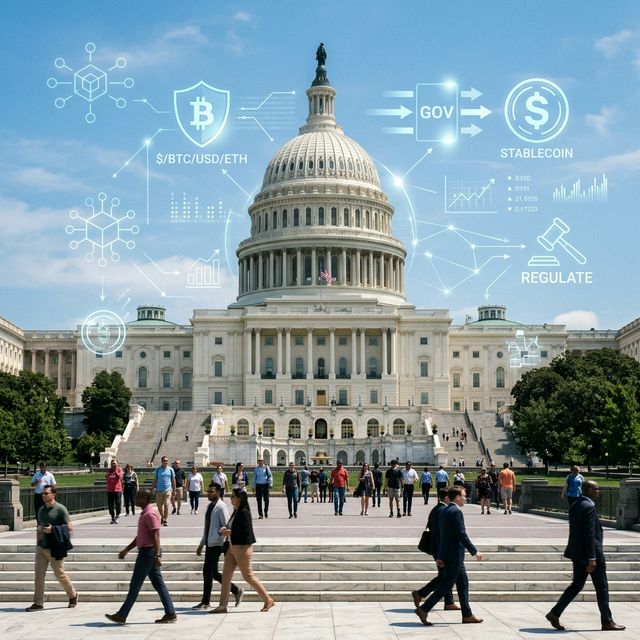
Stablecoins are cryptocurrencies designed to maintain a fixed value - typically pegged 1:1 to a fiat currency like the US dollar. With a combined market capitalisation exceeding $170 billion in early 2026, stablecoins have become indispensable infrastructure for crypto trading, decentralised finance (DeFi), and cross-border payments.
Types of Stablecoins
Fiat-Backed Stablecoins
These are backed by real-world reserves held in bank accounts. For every token in circulation, the issuer holds an equivalent amount of fiat currency or treasury securities:
- USDT (Tether) - The largest stablecoin by market cap (~$90B). Available on virtually every major exchange including
 Binance, Kraken, and
  Crypto.com
 - USDC (Circle) - Known for greater transparency, with monthly attestations from a major accounting firm. Widely used in institutional DeFi
Crypto-Collateralised Stablecoins
DAI, issued by MakerDAO, is backed by a basket of cryptocurrencies deposited as collateral in smart contracts. Users lock up more crypto (typically 150% of the DAI value) to ensure the peg holds even during market downturns.
Algorithmic Stablecoins
These use minting and burning mechanisms to maintain their peg without physical reserves. The catastrophic collapse of TerraUSD (UST) in 2022 - which erased $40 billion in value - demonstrated the risks inherent in this model. Few algorithmic stablecoins have survived, and regulators have taken a hostile stance toward the design.
Uses in the Crypto Ecosystem
- Trading pairs - Most crypto-to-crypto trading occurs against stablecoins (e.g., BTC/USDT) rather than fiat pairs
- DeFi liquidity - Stablecoins are the primary assets deposited into lending protocols and liquidity pools
- Cross-border payments - Stablecoins as cross-border infrastructure are replacing traditional wire transfers in many corridors
- Safe haven - Traders convert volatile assets into stablecoins to preserve value during market downturns (see our market sentiment analysis)
Regulation in 2026
Stablecoin regulation is accelerating worldwide:
- United States - Delaware's bipartisan stablecoin bills aim to establish state-level oversight, while federal legislation remains under debate
- European Union - MiCA (Markets in Crypto Assets) has imposed reserve, redemption, and white paper requirements on all stablecoin issuers operating in the EU
- Australia - ASIC's new licensing framework includes specific provisions for stablecoin issuers, effective July 2026
- Global standards - The CBDC push by central banks is partly a response to the growing adoption of private stablecoins
Risks and Considerations
While stablecoins are less volatile than other crypto assets, they are not risk-free:
- Depegging events - USDC briefly depegged during the Silicon Valley Bank collapse; USDT has faced periodic depegging pressure
- Reserve transparency - Not all issuers provide full, auditable proof of reserves
- Regulatory risk - Changes in regulation could affect the ability to redeem or trade stablecoins
- Smart contract risk - Decentralised stablecoins like DAI depend on complex smart contract systems that can contain vulnerabilities
For investors seeking to understand the broader regulatory landscape, our guide to the Howey Test explains how the SEC determines which crypto assets fall under securities regulation.