The Howey Test is the cornerstone legal framework used by the U.S. Securities and Exchange Commission (SEC) to determine whether a transaction qualifies as an "investment contract" - and therefore a security. Originating from a 1946 Supreme Court case involving Florida orange groves, the test has become the single most important legal concept in cryptocurrency regulation.
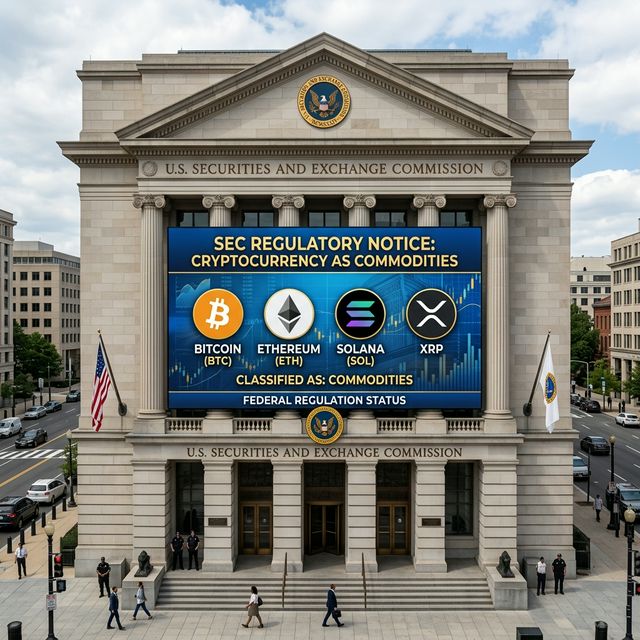
Understanding how the Howey Test works is essential for crypto investors, project founders, and legal practitioners. In March 2026, it gained renewed prominence when the SEC and CFTC jointly classified 16 major crypto assets as digital commodities using a revised version of this very framework.
The Four Prongs of the Howey Test
Under the Howey Test, a transaction is classified as a security if it involves all four of the following elements:
- An investment of money - The buyer commits capital (fiat or crypto) with the expectation of financial return.
- In a common enterprise - The investment is pooled with others, creating shared financial fortunes among investors.
- With an expectation of profits - The investor anticipates earning a return on their investment.
- Derived from the efforts of others - The profits are primarily generated by a third party or promoter, not through the investor's own efforts.
If all four conditions are met, the asset is classified as a security and must comply with SEC registration requirements. If any prong fails, the asset may instead fall under CFTC commodity oversight.
How the Howey Test Applies to Cryptocurrency
The application of the Howey Test to digital assets has been contentious. Bitcoin, for example, has long been considered a commodity because no central promoter drives its value - it is a sufficiently decentralised network. Ethereum's classification was debated for years before the SEC acknowledged it as a commodity.
However, many newer tokens - particularly those sold through Initial Coin Offerings (ICOs) - have been found to satisfy all four Howey prongs. When a project team raises funds by selling tokens, promising to build a platform that will increase token value, the SEC has consistently argued this constitutes a securities offering.
The 2026 Revised Framework
In what many observers call the most significant regulatory development in years, the SEC introduced a revised Howey Test framework in March 2026. This updated approach accounts for the unique characteristics of decentralised networks by evaluating:
- Degree of decentralisation - Networks with no single controlling entity may fail the "efforts of others" prong
- Functional utility - Tokens used primarily for network access or governance may not constitute investment contracts
- Secondary market dynamics - How the asset is marketed and traded post-launch
This revised framework was central to the landmark classification of 16 crypto assets as commodities, including Bitcoin, Ethereum, Solana, and XRP.
Why It Matters for Investors
The classification of a crypto asset as a security versus a commodity has significant practical implications:
- Exchange listings - Securities require regulated securities exchanges; commodities can trade on standard crypto exchanges like
 Binance and Kraken
 - Investor protections - Securities fraud claims fall under SEC jurisdiction, while commodity fraud is handled by the CFTC
- Tax treatment - The classification can affect how gains and losses are reported
- Recovery options - Victims of crypto fraud have different legal avenues depending on classification. Firms like
 SarahLegal navigate both frameworks on behalf of clients
Notable Howey Test Cases in Crypto
Several high-profile enforcement actions have shaped how the Howey Test is applied to digital assets:
- SEC v. Ripple (XRP) - A landmark case where the court found that programmatic sales of XRP on exchanges did not constitute securities transactions, while direct institutional sales did
- SEC v. Telegram (TON) - The SEC successfully argued that Telegram's GRAM tokens were unregistered securities
- SEC v. LBRY - The court ruled that LBRY Credits were securities, despite having functional utility within the LBRY network
These cases established important precedents that continue to guide regulatory enforcement. Blockchain forensics firms like AI Data Intelligence increasingly factor regulatory classification into their compliance tools and tracing reports.
Looking Ahead
The evolution of the Howey Test framework suggests that regulators are moving toward a more nuanced approach to digital asset classification. The introduction of mandatory licensing in Australia and stablecoin regulation in Delaware demonstrate that jurisdictions worldwide are developing complementary frameworks.
For investors, understanding whether a crypto asset passes or fails the Howey Test remains one of the most important due diligence steps before committing capital. As Blockchain Legal Solutions advises: "Always verify the regulatory status of any digital asset before investing."