
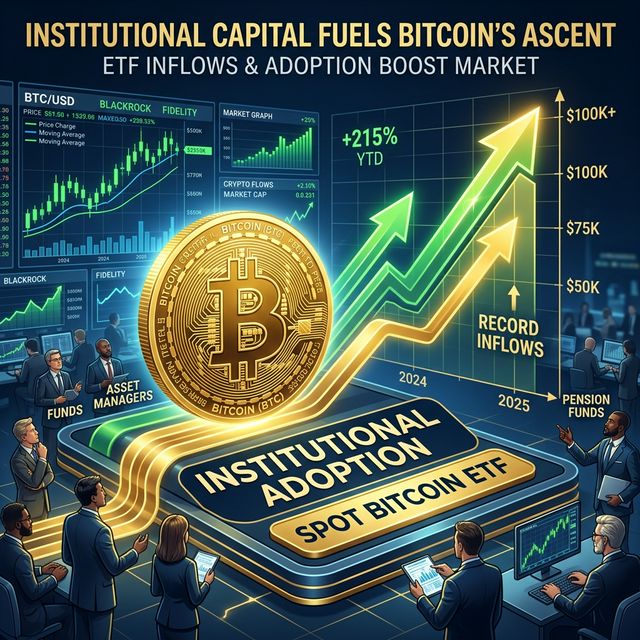
NEW YORK - Bitcoin climbed to $78,100 on April 24, marking its fourth consecutive weekly gain as institutional investors continued to pour capital into spot Bitcoin exchange-traded funds at a pace not seen since January. The rally underscores a fundamental shift in how large-scale investors view digital assets, and the data leaves little room for debate about it.
Over the week ending April 22, US-listed spot Bitcoin ETFs attracted nearly $1 billion in net inflows, one of the strongest weekly intakes since the products launched in early 2024. The streak extended to eight consecutive days of positive flows, drawing over $2 billion between April 6 and April 22 alone, on top of $1.32 billion recorded in March.
The Numbers That Matter
Cumulative net inflows across all spot Bitcoin ETFs have now climbed above $58 billion, with total assets under management hovering around the $100 billion mark. These are not speculative retail flows chasing a pump. This is pension fund money, endowment allocations, and corporate treasury management looking for uncorrelated returns in a world where geopolitical risk and inflation refuse to subside.
BlackRock's iShares Bitcoin Trust (IBIT) continues to dominate, recording over $284 million in single-day inflows during the week and maintaining its position as one of the fastest-growing ETF products in history. Fidelity's FBTC and ARK 21Shares' ARKB also saw meaningful inflows, suggesting the demand is broad-based rather than concentrated in a single product.
MicroStrategy Doubles Down
Adding to the institutional momentum, MicroStrategy announced on April 20 that it had purchased 34,164 Bitcoin for approximately $2.54 billion. The acquisition brings the company's total holdings to 815,061 BTC, making it the largest corporate Bitcoin holder in the world by a significant margin.
The purchase represents MicroStrategy's third-largest acquisition on record. At current prices, the company has generated roughly $3.6 billion in unrealized gains during April alone. CEO Michael Saylor has described the strategy as a "long-duration play on the hardest money ever created," and the market is rewarding that conviction. MSTR shares are up over 40% year-to-date.
Supply Dynamics Are Tightening
What makes this rally structurally different from previous cycles is the supply picture. Liquid Bitcoin on major exchanges has dropped to its lowest level since 2018. Every day that ETFs absorb hundreds of millions in Bitcoin is another day that available supply shrinks. The math is straightforward: sustained institutional buying pressure combined with limited exchange supply creates a structural bid that previous cycles simply did not have.
On-chain data shows whale addresses holding 1,000 or more BTC increased 3.2% month-over-month, indicating that large holders are accumulating rather than distributing. Long-term holder supply, defined as Bitcoin that has not moved in over 155 days, continues to climb.
What Analysts Are Saying
The consensus among institutional research desks has shifted noticeably. Standard Chartered maintained its year-end price target of $150,000, citing ETF inflows and the upcoming supply halving effect as primary catalysts. JPMorgan's digital assets team raised their outlook to $120,000, noting that Bitcoin's correlation with traditional equity markets has declined to its lowest point in two years.
The more immediate resistance level sits at $80,000, a psychological barrier that Bitcoin has tested twice this month without breaking through. A sustained close above that level would likely trigger additional momentum-driven buying from quantitative trading desks and systematic funds.
Ethereum, while lagging Bitcoin's performance, has also benefited from the broader institutional rotation. ETH traded around $2,315 to $2,352 during the week, buoyed by renewed interest in Ethereum-based DeFi protocols and growing institutional demand for spot Ethereum ETFs.
The Broader Picture
Bitcoin's rally is not happening in isolation. It reflects a broader search for assets that can serve as portfolio diversifiers during a period of extraordinary geopolitical uncertainty. The Iran conflict, rising oil prices, US-UK trade tensions, and persistent inflation have created an environment where traditional safe havens like government bonds offer limited protection.
For investors who spent years dismissing Bitcoin as a speculative curiosity, the ETF data tells a different story. Nearly $1 billion in a single week does not come from hobbyists and Reddit traders. It comes from allocation committees, risk managers, and fiduciary duty. That distinction matters, and it is why this cycle feels fundamentally different from what came before.
For background on how Bitcoin ETFs operate, see our Bitcoin ETFs Explained guide. For our coverage of the most recent record, read March's record inflows.