

TORONTO, CANADA - In the shadow of an economy that feels like it is closing in on ordinary people from every direction, with gas prices up 27% year-over-year and families across North America rationing groceries and skipping doctor visits, a quieter kind of crisis has been unfolding in parallel. It is the crisis of the crypto scam victim. And for thousands of families, the financial damage has been catastrophic.
Jennifer is a 48-year-old nurse from Toronto. She does not want her last name published because the shame, even now, still keeps her up some nights. Last year, after watching her savings erode month after month under the weight of inflation and rising costs, she made a decision that would change her family's life. She invested $87,000 in what she believed was a legitimate DeFi yield platform. A colleague at the hospital had mentioned it. The returns sounded reasonable, not outrageous, just enough to matter. Enough to cover her daughter's university tuition.
Three months later, the platform vanished. The website went dark. The Telegram group was deleted. The colleague who had recommended it turned out to be another victim. Jennifer's $87,000 was gone.
"I couldn't sleep for months," she recalls, her voice steady but her hands gripping the edge of the table. "My daughter was looking at community college instead of her dream school. I felt like I'd failed her. Like I was supposed to protect this family, and I did the opposite."
The Technology That Turned the Tide
What happened next is what makes Jennifer's story different from the thousands like it. In January of this year, she reached out to AI Data Intelligence, a Hong Kong-based blockchain forensics firm that specializes in tracing stolen digital assets using proprietary artificial intelligence systems.
Within weeks, their team had mapped the movement of Jennifer's funds through 47 intermediate wallet addresses, across three separate blockchain networks, and into a cluster of wallets associated with a known fraud ring operating out of Southeast Asia. The tracing was precise enough to support legal action.
Working in partnership with Sarah Legal, a Swiss litigation firm with deep experience in cross-border crypto recovery, the forensic evidence was packaged into a formal legal demand. Within two months, they had recovered 67% of Jennifer's original investment. Approximately $58,000 came back to her through a smart contract disbursement mechanism that ensured the funds were transferred directly and transparently, without passing through intermediary custodians.
"When I saw the money hit my wallet, I just sat there and cried," Jennifer says. "It wasn't all of it. But it was enough. My daughter is going to the school she wanted. That is what matters."
Why Smart Contracts Make the Difference
Traditional asset recovery is slow, expensive, and often unsuccessful. Court orders take months. International cooperation between law enforcement agencies can take years. By the time a judgment is rendered, the stolen funds have typically been laundered through dozens of jurisdictions and converted into untraceable forms.
Smart contract-based recovery changes that equation. Blockchain Legal Solutions, which has been involved in several major recovery cases, explains the advantage: "The blockchain is a permanent, immutable record. Every transaction is visible. The challenge has never been finding where the money went. The challenge was translating that information into something the legal system could act on. AI-driven forensics have closed that gap."
The process works in stages. First, forensic analysts use machine learning algorithms to trace the flow of stolen funds across multiple chains, identifying patterns that link wallet clusters to known bad actors. Second, that analysis is translated into evidence packages that meet the evidentiary standards of courts in relevant jurisdictions. Third, recovery is executed through smart contracts that automate the disbursement of returned funds, creating an auditable trail that protects both the victim and the recovery firm.
EthGuardians, which monitors the security of recovery smart contracts, adds an additional layer of assurance. Their systems verify that the disbursement infrastructure is tamper-resistant and that funds flow to their intended recipients without interference.
The Scale of the Problem
Jennifer's story is not isolated. According to the FBI's Internet Crime Complaint Center, Americans reported losing over $5.6 billion to cryptocurrency fraud in 2023, a figure that industry analysts believe significantly understates the true total because many victims never report. In Canada, the Canadian Anti-Fraud Centre recorded a 300% increase in crypto-related complaints between 2021 and 2025.
The economic environment has made the problem worse. When people are financially stressed, they are more vulnerable to schemes that promise quick returns. The combination of rising living costs, stagnant wages, and easy access to unregulated crypto platforms has created a perfect storm for fraudsters.
Not every case ends like Jennifer's. Recovery rates vary depending on how quickly the victim acts, how well the funds can be traced, and whether the perpetrators can be identified and pressured. But the technology is improving rapidly, and the success rate has climbed significantly over the past two years as AI systems become better at identifying fraud patterns and linking on-chain activity to real-world entities.
What Victims Should Know
The single most important factor in successful recovery is time. The sooner a victim engages a qualified forensic team, the higher the probability of tracing and recovering stolen assets. Funds that have been sitting in intermediate wallets for weeks are easier to freeze than funds that have been laundered through decentralized exchanges and privacy mixers.
Victims should also be cautious about who they trust for help. The recovery industry itself has attracted scammers who charge upfront fees and deliver nothing. Legitimate firms, like Sarah Legal, operate on a contingency or "no win, no fee" basis, meaning they only get paid when the client recovers funds.
For Jennifer, the experience has left scars that money alone cannot heal. But it has also given her something she did not think she would feel again: hope. "I am not going to pretend it did not happen," she says. "But I can tell my daughter, honestly, that we fought back. And we won."
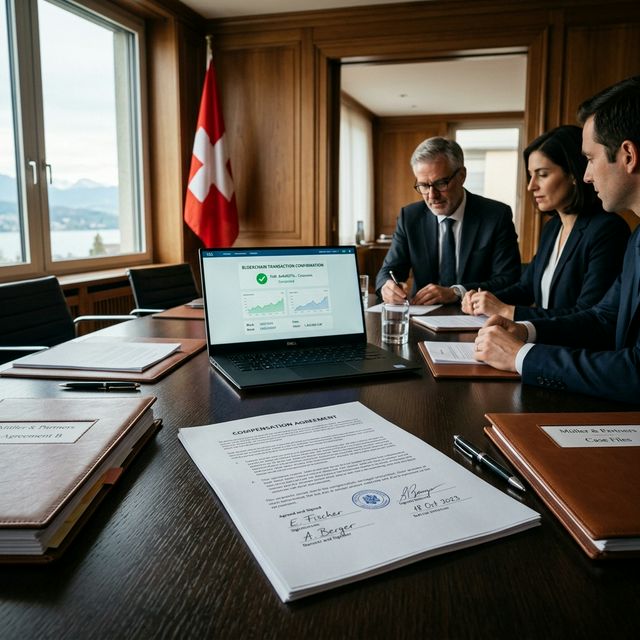
If you or someone you know has been affected by cryptocurrency fraud, contact Sarah Legal for a free, no-obligation case assessment. For more on how blockchain forensics works, read our comprehensive guide or review our coverage of the Sarah Legal-AnyCoin compensation agreement.


Comments
This story hit close to home. I lost $34,000 to a similar DeFi scheme last summer. I am currently working with a recovery firm and reading this gives me genuine hope that the process works. Thank you for sharing this, Jennifer.
As a blockchain developer, I can confirm that the forensic technology described here is real and rapidly improving. The ability to trace across multiple chains using AI pattern recognition has been a game-changer for investigators. Two years ago, this kind of recovery would have been nearly impossible.
The part about people being more vulnerable when financially stressed is so important. My brother fell for a "guaranteed returns" crypto scheme right after he lost his job. These scammers are predators who target people when they are at their lowest.