
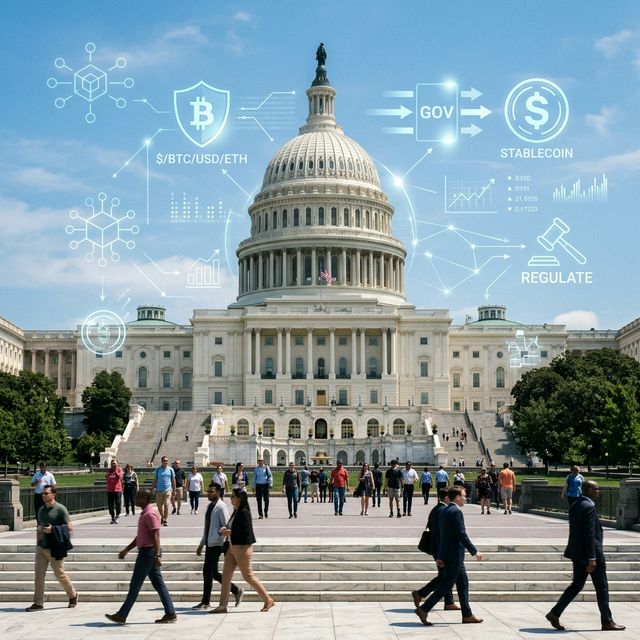
The U.S. Treasury this week published a proposed rule under Section 3 of the GENIUS Act that, for the first time with binding force, would define who may issue, offer, or sell a payment stablecoin to someone in the United States — and what criminal penalties apply to anyone who does so without authorisation. A 60-day comment period is now open. The fight that will shape the final text is how broadly "in the United States" applies to transactions on global crypto networks.
The proposal is the most consequential stablecoin enforcement step since the Act was signed in 2025. It sits on top of the statute's existing design: 1:1 high-quality reserves, no interest to holders, bank or OCC-trust issuance, and a January 2027 enforcement trigger. Market coverage this week also noted the scale of the compliance gap for offshore issuers; Tether in particular would need a large reserve and structural fix if the U.S. perimeter is drawn tightly.
CLARITY Act and the September Calendar
The Digital Asset Market Clarity Act remains the other moving piece. A cloture motion was filed on 8 August, but the bill had not received a floor vote before the Senate recess. The next scheduled action is expected in September, with some desks pointing to a 15 September procedural vote. Prediction markets have been pricing 2026 passage in a rough 42–50% range.
If CLARITY passes, it could rewrite parts of GENIUS — especially the treatment of yield and rewards programmes that Coinbase and other exchanges have opposed. If it fails, the GENIUS text including the yield ban and the 2027 clock governs as written. White House meetings with industry executives this week added a political overlay, including comments about considering a larger official Bitcoin holding, which traders treated as sentiment, not policy.
SEC Fundraising Overlay
Separately, the SEC proposed a Regulation Crypto Assets framework with two fundraising exemptions: one allowing issuers to raise up to $5 million over four years, and another up to $75 million in any 12-month period, with disclosure scaled to size. Together with Treasury's stablecoin NPRM, Washington is trying to split the stack: payment tokens under banking-style rules, and capital formation for other crypto assets under securities-style exemptions.
For the May comparison of U.S., EU, and UK stablecoin standards, see GENIUS, MiCA, and FCA convergence. For how tokenised bank money is competing with those coins, see Wall Street's tokenized deposit network.