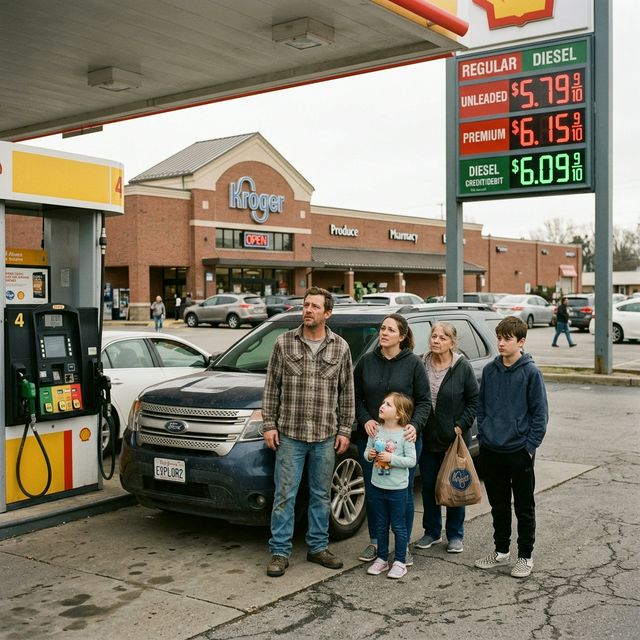
ACROSS AMERICA - The numbers are hard to argue with, and the stories behind them are harder to hear. Nearly 80% of Americans say they have changed their spending habits because of rising gas prices. They are canceling subscriptions, staying home instead of going out, selling personal items online, and in some cases, selling blood plasma to make ends meet. Some are delaying medical appointments. Others are putting off having children.
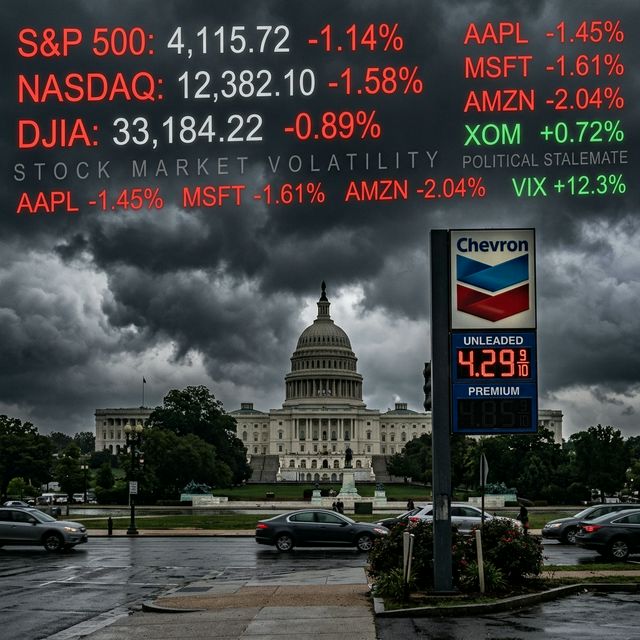
This is not a recession in the traditional sense. The stock market hit all-time highs this week. Corporate earnings are growing at 16% year-over-year. On paper, the economy looks robust. But the lived experience of ordinary working families tells a very different story, and that gap between Wall Street and Main Street has rarely been wider.
The Gas Station Reality
Gas prices have climbed from $2.98 per gallon before the Iran conflict to over $4 in most states, a 27% increase according to AAA. The surge is a direct consequence of the war's disruption to oil shipping through the Strait of Hormuz, which handles roughly 20% of the world's petroleum traffic.
Economists at Stanford estimate that the Iran war has cost American households an average of $857 per year in additional gasoline expenses alone. Morgan Stanley calculates that every $1-per-gallon increase in gas prices translates to roughly $450 per year in added fuel costs for the average driver, assuming 27 miles per gallon and 12,000 annual miles.
Energy Secretary Chris Wright acknowledged in congressional testimony that prices may not fall below $3 per gallon until 2027. For families already stretched thin, that timeline feels like a life sentence.
How Families Are Coping
The CNBC All-America Economic Survey, conducted April 15 through 19, paints a detailed picture of the sacrifices being made:
Roughly 60% of respondents said they had cut spending on entertainment, including dining out, movies, and concerts. More than half reported reducing travel. About 40% said they were cutting back on essentials like groceries and medical care, a number that catches the attention of public health experts because it means people are rationing their own healthcare.
Nearly one-third of respondents have canceled subscriptions. A quarter have delayed buying a home or a car. Fifteen percent have delayed or decided not to see a doctor to save money. And seven percent have delayed or decided against having children because of the financial pressure.
Those last two figures deserve attention. When people stop seeing doctors and stop having families because they cannot afford gas, the conversation has moved well beyond consumer sentiment surveys. It has entered the territory of structural harm.
The Retail Sales Illusion
Headlines last month trumpeted a 1.7% jump in March retail sales to $752.1 billion. The number sounded strong. But the details told a different story. Core retail sales, excluding gas stations, rose only 0.6%. Gas station sales surged 15%, not because people bought more gas, but because the same amount of gas cost dramatically more.
Restaurant spending slowed to its weakest growth rate since the pandemic, at just 2.4% annualized. This is the canary in the coal mine for consumer-facing businesses. When people stop eating out, the ripple effects hit servers, kitchen workers, suppliers, and landlords in rapid succession.
Consumer sentiment, as measured by the University of Michigan, fell to 53.3% in March, its lowest level since December 2025 and down 5.8% from February. The pessimism spans all age groups and political affiliations, which is unusual. Normally, supporters of the sitting president maintain higher confidence. Not this time.
The K-Shaped Reality
What makes this moment particularly painful is the wealth divergence playing out in plain sight. Higher-income households can absorb $4 gas without fundamentally changing their lifestyles. Lower and middle-income families cannot. The same week that the S&P 500 hit a record, a single mother in West Virginia was deciding between filling her gas tank and filling a prescription.
Fifty-nine percent of Americans disapprove of the president's handling of the economy. That number crosses party lines. It crosses demographics. And it crosses the imaginary boundary between economics and politics in ways that make strategists on both sides deeply uncomfortable.
The Iran war did not create this vulnerability. It exposed one that was already there: an economy producing impressive headline numbers while leaving tens of millions of people one bad month away from crisis. Gas prices just made the crisis visible at every intersection in every town in the country.
For related coverage, see our analysis of the political implications of economic discontent and oil market developments driven by Middle East tensions.