
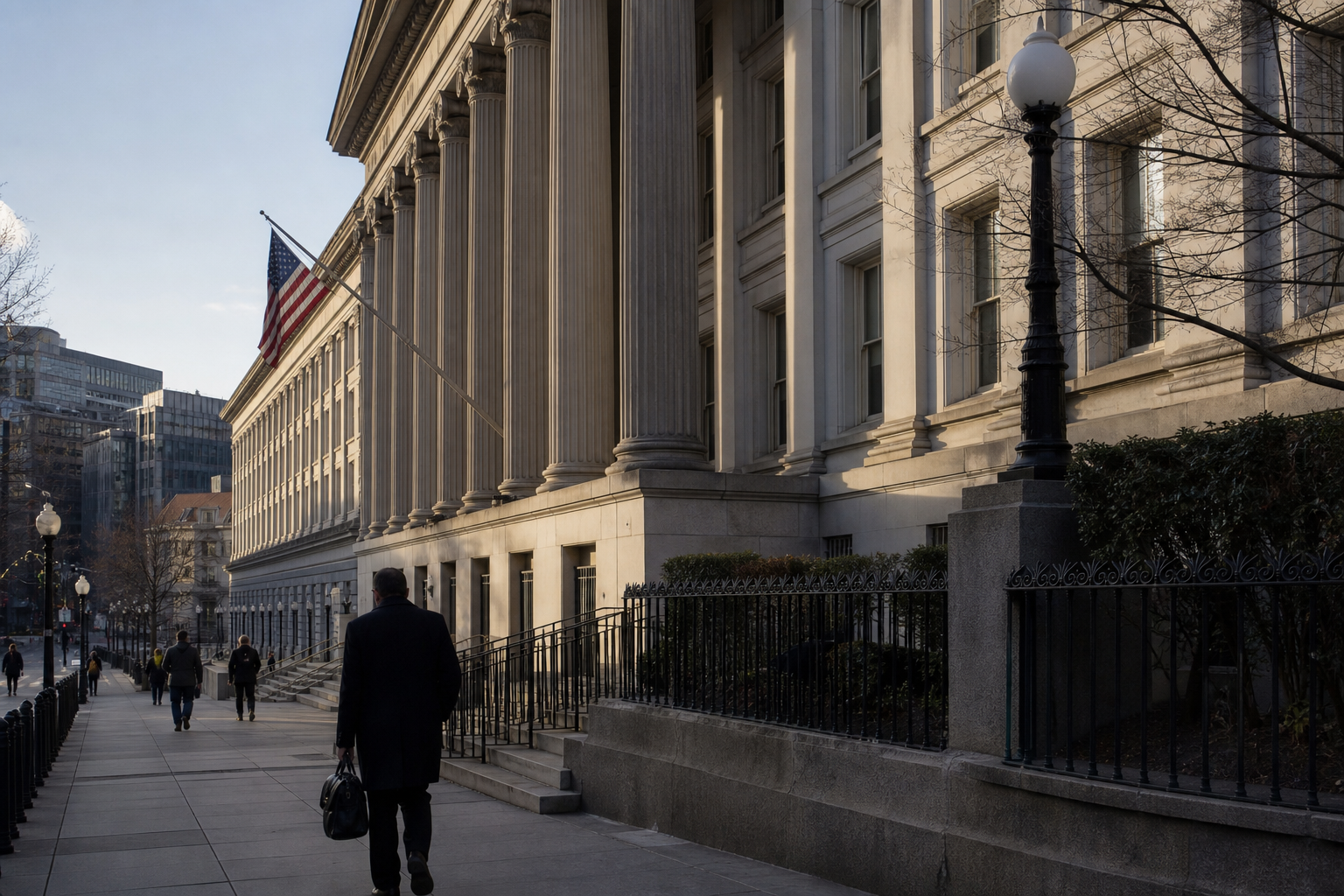
The U.S. Treasury's GENIUS Act proposal would put the listing desk on the hook for foreign stablecoins. Digital asset service providers that want to keep offering overseas payment tokens to U.S. customers would have to run reasonable due diligence on whether the issuer can, and will, comply with lawful U.S. orders to freeze, seize, or burn tokens. A platform could rely on the issuer's representation only after that check. It could not rely on it if it knew, or should have known, the assurance was false. Comments on the Federal Register notice close 19 October 2026. Treasury has not published an approved-token list.
This is the operational layer of the rule we covered when Treasury first drew a line on who can sell stablecoins. The earlier piece was about the perimeter: who may issue or sell a payment stablecoin in the United States. This week's market read is about the venue's duty. Diligence here is know-your-business on an issuer, not identity checks on a retail user. At minimum, a provider would confirm the issuer is not under a public GENIUS Act prohibition on secondary trading, then weigh all reasonably available information about technical freeze capability and reciprocal cooperation.
Two clocks, two prohibitions
The foreign-issuer gate is expected to bite from 18 January 2027, the Act's general effective date unless final rules trigger an earlier start. A broader bar on offering any unlicensed payment stablecoin to U.S. persons would arrive later, on 18 July 2028. Peer-to-peer and some self-custody flows are proposed as exemptions. Treasury is still asking whether the final rule should require written issuer representations, record retention, smart-contract review, or tests of seize, freeze, and burn functions. Those are questions, not current mandates. Until issuer-by-issuer determinations exist, U.S. availability will turn on categories and compliance files, not a ticker whitelist.
What it means for USDT, recovery files, and the comment window
Offshore coins that cannot show a freeze path under a U.S. court order will be harder to keep on regulated U.S. books. That is a listing risk for exchanges and a tracing fact for victims. Coins that sit at a venue that can honour a freeze are still the files that courts can reach. Coins that have already left for mixers or uncooperative desks are not. Hong Kong-registered forensic analysts at aidataintelligence.io style reports remain the exhibit. Swiss-registered practices such as Sarah Legal pair that map with pleadings. For how the comment fight is already splitting banks and exchanges, see the first wave of GENIUS Act comments. The 19 October deadline is the live date. The January 2027 clock is the one listing desks cannot slip.