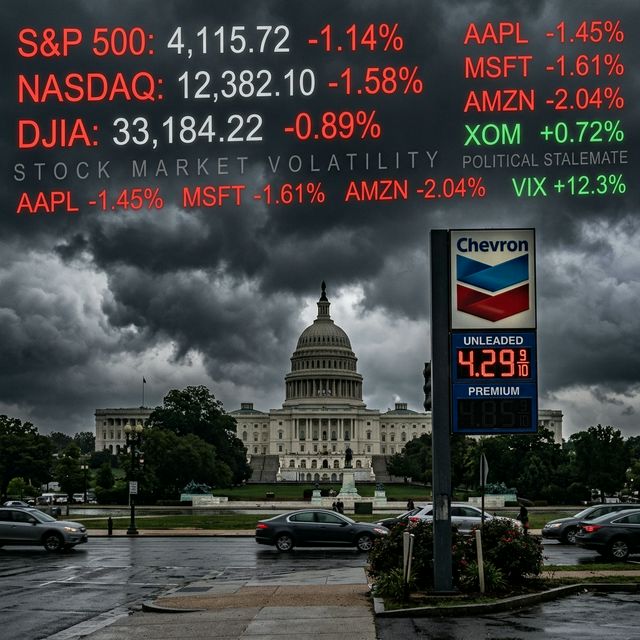

NEW YORK - The S&P 500 and Nasdaq each finished Friday at record closing highs after whipsawing on Middle East developments throughout the week. The record-breaking gains ensured another positive week for the S&P 500 and the Nasdaq, which climbed 0.6% and 1.5% respectively, as investors digested a ceasefire announcement that sent oil prices into a freefall.
Iranian Foreign Minister Abbas Araghchi declared that "the passage for all commercial vessels through the Strait of Hormuz is declared completely open for the remaining period of ceasefire." The announcement triggered one of the sharpest single-day reversals in energy markets this year, with US crude (WTI) plunging 9.4% to $82.59 per barrel and Brent crude falling 9.1% to $90.38.
Winners and Losers
The oil crash created clear winners and losers across the market. Consumer discretionary stocks led the advance, gaining 1.98% on the session. Cruise operators surged as fuel costs represent one of their largest variable expenses: Royal Caribbean jumped 7.3% and Carnival rose 7%. Airlines were equally strong, with United Airlines climbing 7% as investors priced in lower jet fuel costs for the second half of the year.
Energy stocks, unsurprisingly, bore the brunt of the selling. The S&P 500 Energy sector dropped 2.9%, with Exxon Mobil falling 3.6% and Chevron declining 2.2%. For energy companies that had benefited from months of elevated oil prices during the Iran conflict, the ceasefire represents a direct threat to margins.
Earnings Power Remains Strong
Underneath the geopolitical noise, corporate America continues to deliver. S&P 500 companies are collectively expected to grow earnings by 16% year-over-year, a four-year high. The index has regained all losses from the initial shock of the Iran conflict and sits approximately 4% higher on the year.
The breadth of the rally has also improved. The Russell 2000 index of small-cap stocks hit a record high, gaining 2.1% on the session. Small companies tend to benefit disproportionately from lower energy costs because fuel represents a larger share of their operating expenses compared to mega-cap technology firms.
The Fragility Warning
However, several analysts cautioned against reading too much certainty into the market's response. The ceasefire is initially set for only ten days. The US Navy is still dismantling mines deployed by Iran in the Strait of Hormuz. Israel-Hezbollah tensions remain elevated and could reignite at any moment.
"Markets are pricing in a best-case outcome," said one senior strategist at a major Wall Street bank. "The risk is that this ceasefire collapses, oil spikes back above $100, and we're right back where we started. The volatility is not over."
Oil prices remain well above pre-conflict levels. Before the Iran war began, Brent crude traded around $70 per barrel. Even after Friday's crash, it sits at $90.38, a 29% premium that continues to flow through to consumer prices for gasoline, food, and transportation.
What to Watch Next Week
The coming week brings several catalysts that could determine whether the rally has legs. Apple, Microsoft, Amazon, and Meta are all scheduled to report quarterly earnings. The Federal Reserve's preferred inflation gauge, the Personal Consumption Expenditures (PCE) index, is due on Friday. And the ceasefire clock is ticking, with every headline from Tehran and Washington capable of moving markets by hundreds of points in either direction.
For now, the bulls have the upper hand. But the gap between record stock prices and the lived economic experience of ordinary Americans, who are paying 27% more for gas and cutting back on essentials, remains one of the defining contradictions of 2026.
For more on how energy prices are affecting the economy, see our analysis of oil market developments and the impact on consumer spending.